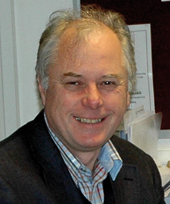
Position/Status
- Emeritus Professor of Education
- Life Fellow of Hughes Hall
E-mail Address
- kr18@cam.ac.uk
Qualifications
- BA [Hons], MA (Oxford) Mathematics
- PGCertEd (Moray House) Secondary Mathematics Teaching
- DipEd (Edinburgh) Education and Psychology
- PhD (Stirling) Education
- MA (Cambridge)

Profile
Kenneth Ruthven taught mathematics and computing in schools in Scotland and England before joining the Faculty of Education in 1983. His professional interests include the improvement of mathematics teaching, and of STEM education more broadly; the design and integration of innovative educative tools and resources; the education and professional development of teachers; and the refinement of theory and method in educational research. He became emeritus professor on retirement in 2017.
Ken(neth)'s research examines curriculum, pedagogy and assessment, especially in mathematics, and particularly in the light of technological change. His projects have been carried out with support from a range of agencies: these include the Economic and Social Research Council (ESRC) and the Nuffield Foundation as well as the (former) National Council for Educational Technology (NCET), School Curriculum and Assessment Authority (SCAA), Qualifications and Curriculum Authority (QCA), and Social Science Research Council (SSRC).
His most influential research has been on calculator- and computer-mediated mathematical thinking, technology-integrative teaching approaches, tools for didactical design, ability stereotyping in mathematics, knowledge for teaching mathematics, and the warranting of teaching practices. Recent projects have developed a framework for analysing integration of digital resources in classroom teaching, explored dialogic approaches to school mathematics and science teaching, studied teacher professional learning through social media, and reviewed the last 20 years of European research in mathematics education. Further information is available through the hyperlinks below to recent presentations and publications, and to a fuller listing of publications.
Ken is former Editor-in-Chief (and a current Advisory Editor) of the international research journal, Educational Studies in Mathematics, and former Chair of the British Society for Research into Learning Mathematics (remaining an Advisory Editor of its journal, Research in Mathematics Education). He serves as Chair of Trustees of the UK curriculum development charity, the School Mathematics Project, and has had a longstanding association with the US curriculum development project, Core-Plus Mathematics, as a member of its Advisory Board. In 2011 he was elected a Fellow of the Academy of Social Sciences. In recent years he has served as a guest professor in mathematics education at Karlstad University in Sweden and at the University of Agder in Norway, and as an honorary professor of East China Normal University in Shanghai.
Within the Faculty, Ken held a range of leadership roles, serving as Dean/Director of Research (2003/07 and 2011/13), Chair of Science, Technology & Mathematics Education (2007/11), Deputy Head of Faculty (1997/2002 and 2004/07), Coordinator of Graduate Studies (1994/97), and Coordinator of Initial Teacher Education (1990/93). He also represented the School of Humanities and Social Sciences on the University’s Research Policy Committee (2013/16).
Ken instigated several significant innovations in the Faculty. As Coordinator of Initial Teacher Education he led development of the original PGCE partnership between the Faculty and regional schools. As Coordinator of Graduate Studies he established the Faculty's ESRC-recognised doctoral research training and MPhil courses in Educational Research and in Teaching and Teacher Education. He also served for periods as coordinator of the Faculty's master's provision in Mathematics Education, as well as teaching and supervising extensively on all the aforementioned courses. As Director of Research he instituted a system of Academic Groups designed to promote coordinated development of teaching and research capacity in each of the main areas of the Faculty's activity.
Academic Groups/Areas
Research Topics
- Curriculum, pedagogy and assessment; particularly in relation to mathematics.
- Design and improvement of mathematics, informatics and science teaching.
- Development of teacher expertise; particularly in relation to subject teaching and technology use.
- Educational use of new (and old) technologies; particularly in school mathematics.
Recent doctoral students
Meghna Nag Chowdhuri (2020) Teachers’ use of reform-oriented mathematics textbooks: A multiple-case study of Delhi government primary school teachers.
Melise Camargo (2018): Surveying mathematics teachers' knowledge of formative assessment: a study of teachers in the Federal District of Brazil.
Gulay Bozkurt (2016): Teaching with technology: a multiple-case study of secondary teachers’ practices of GeoGebra use in mathematics teaching.
Recent conference presentations
Using ideas of 'resource system' to analyse the work of mathematics teaching. Online lecture in Anniversary Lecture Series, East China Normal University, Shanghai, October 2020. Lecture slides
Ecological, epistemological and existential challenges of integrating digital tools into school mathematics. Plenary lecture at the International Symposium on Mathematics Education, Asian Centre for Mathematics Education, East China Normal University, Shanghai, November 2019. Lecture slides
The construct of 'resource system' as an analytic tool in understanding the work of teaching. Plenary lecture at international Re(s)sources conference at the Institut Français de l’Éducation, École Normale Supérieure de Lyon, May 2018. Lecture video Lecture slides Lecture paper
Exploring mathematics education research in the UK and its impact on policy and practice. Keynote lecture at special joint meeting of the Commission Française pour l'Enseignement des Mathématiques (CFEM) and the British Society for Research into Learning Mathematics (BSRLM), London Mathematical Society, March 2017. Lecture slides
Constructing dynamic geometry: the interpretative flexibility of mathematical software in teaching practice. Invited lecture at quadrennial International Congress on Mathematical Education of the International Commission on Mathematical Instruction (ICME-13), University of Hamburg, July 2016. Lecture paper
Digital computational tools in school mathematics: ecological, epistemological and existential challenges. Plenary lecture at biennial meeting of the Swedish Society for Research in Mathematics Education (MADIF-10), Karlstad University, January 2016. Lecture paper
Recent publications
Ruthven, K. (2022). Ergonomic, epistemological and existential challenges of integrating digital tools into school mathematics. Asian Journal for Mathematics Education, 1(1) Open access.
Borg, A., Fahlgren, M., & Ruthven, K.
(2020). Programming as a mathematical instrument: the implementation of an analytic framework. Proceedings of the 10th ERME Topic Conference - Mathematics Education in the Digital Age (pp. 435-442).
Ruthven, K. (2020). Problematising learning to teach through mathematical problem posing. International Journal of Educational Research, 102, 101455.
van Bommel, J., Randahl, A.-C., Liljekvist, Y., & Ruthven, K. (2020). Tracing teachers’ transformation of knowledge in social media. Teaching and Teacher Education, 87, 102958.
Pepin, B., Artigue, M., Gitirana, V., Miyakawa, T., Ruthven, K., & Xu, B. (2019). Mathematics teachers as curriculum designers: an international perspective to develop a deeper understanding of the concept. In L. Trouche, G. Gueudet & B. Pepin (Eds.) The 'Resource' Approach to Mathematics Education (pp. 121-143). Heidelberg: Springer.
Ruthven, K. (2019). The construct of 'resource system' as an analytic tool in understanding the work of teaching. In L. Trouche, G. Gueudet & B. Pepin (Eds.) The 'Resource' Approach to Mathematics Education (pp. 43-59). Heidelberg: Springer.
Bozkurt, G., & Ruthven, K. (2018). The activity structure of technology based mathematics lessons: a case study of three teachers in English secondary schools. Research in Mathematics Education, 20(3), 254–272.
Dreyfus, T., Artigue, M., Potari, D., Prediger, S., & Ruthven, K. (Eds.) (2018). Developing Research in Mathematics Education: Twenty Years of Communication, Cooperation and Collaboration in Europe. London: Routledge. Link Preview
Hofmann, R., & Ruthven, K. (2018). Operational, interpersonal, discussional and ideational dimensions of classroom norms for dialogic practice in school mathematics. British Educational Research Journal, 44(3), 496-514 Open access.
Ruthven, K. (2018). Constructing dynamic geometry: insights from a study of teaching practices in English schools. In G. Kaiser, H. Forgasz, M. Graven, A. Kuzniak, E. Simmt & B. Xu (Eds.) Invited Lectures from the 13th International Congress on Mathematical Education (pp. 521-540). New York: Springer. Open access
Ruthven, K. (2018). Instructional activity and student interaction with digital resources. In L. Fan, L. Trouche, C. Qi, S. Rezat & J. Visnovska (Eds.) Research on Mathematics Textbooks and Teachers’ Resources: Advances and issues (pp. 261-275). New York: Springer.
Bozkurt, G., & Ruthven, K. (2017). Classroom-based professional expertise: a mathematics teacher’s practice with technology. Educational Studies in Mathematics, 94(3), 309-328.Open access
Pepin, B., Choppin, J., Ruthven, K., & Sinclair, N. (2017). Digital curriculum resources in mathematics education: Foundations for change. ZDM, 49(5), 645-661. Open access
Ruthven, K., Mercer, N., Taber, K., Guardia, P., Hofmann, R., Ilie, S., Luthman, S., & Riga, F. (2017). A research-informed dialogic-teaching approach to early secondary-school mathematics and science: the pedagogical design and field trial of the epiSTEMe intervention. Research Papers in Education 32(1), 18-40. Open access
Ruthven, K. (2017). Digital computational tools in school mathematics: ecological, epistemological and existential challenges. In J. Häggström, E. Norén, J. van Bommel, J. Sayers, O. Helenius, & Y. Liljekvist (Eds.) Proceedings of the 10th. research seminar of the Swedish Society for Research in Mathematics Education [Madif 10] (pp. 1-11). Open access
Arcavi, A., Boero, P., Kilpatrick, J., Radford, L., Dreyfus, T., & Ruthven, K. (2016). Didactique goes travelling: its actual and potential articulations with other traditions of research on the learning and teaching of mathematics. In B. Hodgson, A. Kuzniak & J.-B. Lagrange (Eds.) The Didactics of Mathematics: Approaches and Issues (pp. 15-41). New York: Springer.
Ruthven, K., & Hofmann, R. (2016). A case study of epistemic order in mathematics classroom dialogue. PNA (Pensamiento Numérico y Algebráico) Special Issue on Language and Mathematics 11(1), 5-33. Open access
Ruthven, K. (2016). The re-sourcing movement in mathematics teaching: some European initiatives. In M. Bates & Z. Usiskin (Eds.) Digital Curricula in School Mathematics (pp. 75-86). Charlotte NC: Information Age Publishing.
Ruthven, K. (2016). The contribution of university training schools to developing research-informed professional knowledge in teaching: ideas from the Cambridge Faculty of Education. In P. Gronn & J. Biddulph (Eds.) University Challenge: Cambridge’s Primary School for the Nation (pp. 161-177). Cambridge: Cambridge University Press.
Taber, K. S., Ruthven, K., Mercer, N., Riga, F., Luthman, S., & Hofmann, R. (2016). Developing teaching with an explicit focus on scientific thinking. School Science Review, 97(361), 75-84. Offprint.
Publications (listed by year of publication or number of citations)
Access this information in Kenneth Ruthven's Google Scholar profile.