Research in the Faculty of Education is organised around Research Groups. These groups bring together Faculty staff and research students with similar interests to focus on particular areas of education research, develop projects, undertake joint activities, and share expertise.
Incorporated within these Groups are three major Research Centres. These are large, flagship research structures with their own organisation and identity, which have a high public profile and run larger-scale projects.
Research Centres
Research for Equitable Access and Learning
Education is at the heart of social transformation. It is a fundamental human right and has the potential to reduce poverty, empower women, improve health and drive economic growth.
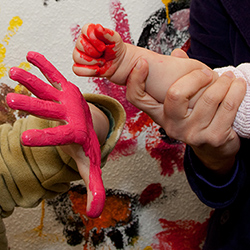
Play in Education Development and Learning
The guiding focus of PEDAL's work is to develop world class research concerned with the role of play and playfulness in young children's learning and development.
Centre for Research in Children's Literature
Research at the CRCLC is multifaceted and touches upon every aspect of children’s and young people’s lives. The centre is jointly funded by the Faculty of Education and Homerton College.
Andrew and Virginia Rudd Research and Professional Practice Centre
The Rudd Centre is a research-intensive initiative that engages state-of-the-art scientific and practice-based advances to influence children’s development, mental health and life chances.
Research Groups
Curriculum, Pedagogy and Professional Learning
CPPL brings together researchers and practitioners who share a passion for understanding how curriculum, pedagogy, and professional learning shape education
Cambridge Educational Dialogue Research
CEDiR’s aim is to consolidate and extend educational dialogue research, reaching across disciplines and contexts. CEDiR has built and expanded to become a large and vibrant group.
THRiVE: Researching Education and Human Thriving

THRiVE is a research group exploring how education can promote positive environments and wider societal transformations that enable everyone, especially young people, to thrive.
Multilingualism and Languages Education
The Multilingualism and Languages Education Group specialises in researching a range of theoretical, empirical, policy and practice-related topics around the theme of multilingualism and education.
Psychology, Education and Learning Studies
PELS studies human learning and development across the life span, in education as well as other formal and informal contexts. The group hosts the specialist PEDAL research centre.
Global Justice Collective
GJC seeks to contribute to the formation of transnational solidarities that resist, refuse, and imagine alternatives to educational systems, institutions, and practices that reproduce global systems of domination.